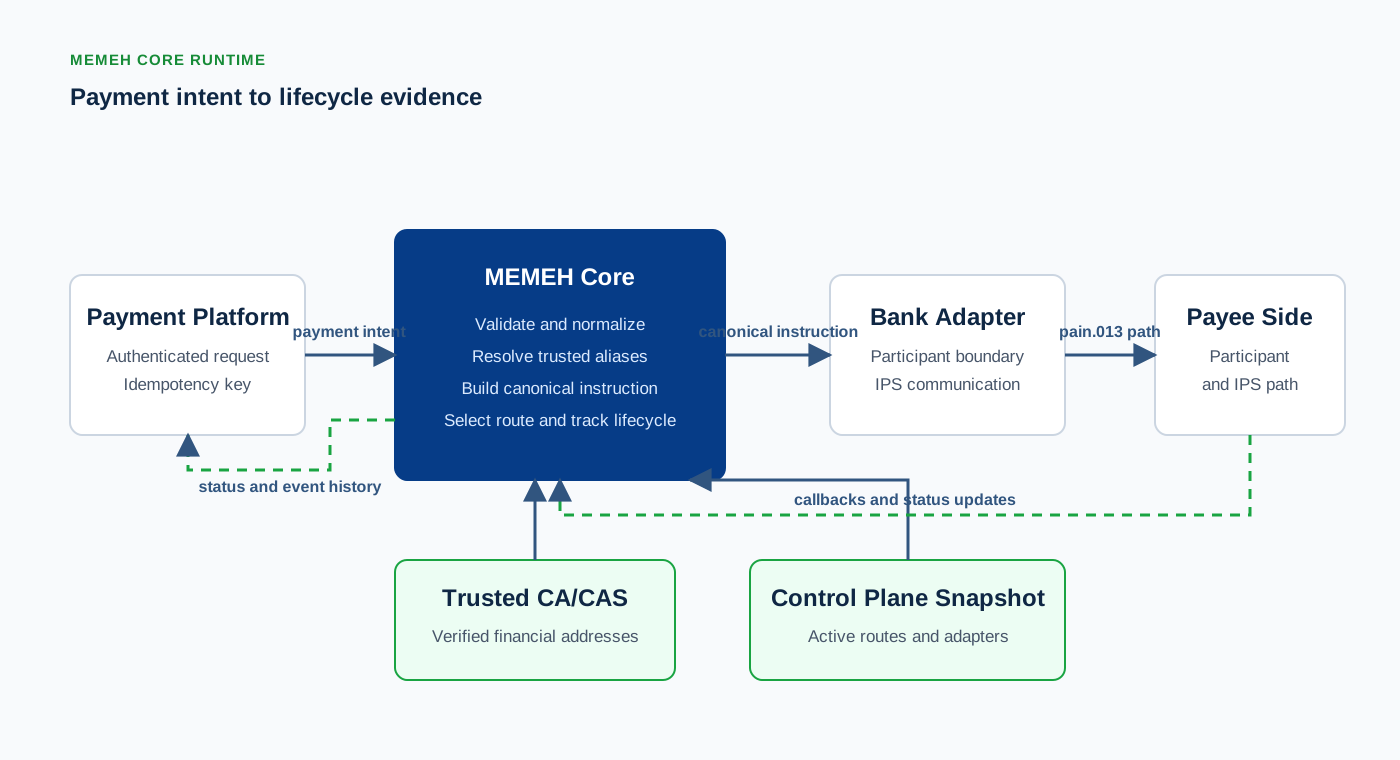

Architecture
MEMEH Core is the narrow orchestration runtime between payment platforms, trusted alias resolution, published route configuration, and Bank Adapters.
- • Validates and normalizes payment-intent requests
- • Resolves aliases and builds the canonical instruction
- • Selects the route, dispatches, and records lifecycle evidence
- • CA/CAS owns trusted alias resolution data
- • Control Plane owns route publication
- • Bank Adapter and participant own IPS mechanics and updates
Diagram legend (1–6)
Each step maps to the lifecycle section below.
High-level model
A practical stack view of how responsibilities split across initiating clients, MEMEH, adapters, and banks.
Components
Access applications, documentation, credentials, UAT evidence, downloads, and audit support outside the Core runtime.
Publishes versioned runtime route and adapter snapshots consumed by Core.
Payment-intent validation, trusted alias orchestration, canonical instruction routing, dispatch, and lifecycle state.
Bank-specific translation, participant/IPS communication, and callback return flow.
Request lifecycle
The same sequence shown in the diagram, mapped to stages 1–6.
-
1Payment intent submittedThe payment platform sends an authenticated request with an idempotency key.
-
2Request normalizedMEMEH validates aliases, amount, currency, reference, description, and replay controls.
-
3Aliases resolvedTrusted CA/CAS produces verified payer/payee financial addresses and servicer identifiers.
-
4Instruction and route preparedMEMEH builds the canonical instruction and selects the active route from the runtime snapshot.
-
5Bank Adapter dispatchThe selected adapter communicates with the payee-side participant and IPS path.
-
6Lifecycle closedCallbacks are deduplicated, transitions validated, and status/event history exposed.
Security model
Security is enforced at the request boundary through authenticated clients, replay protection, controlled credential issuance, and auditable runtime configuration.
Identity is established per integration boundary and used to authorize request submission.
Nonce/timestamp + idempotency prevent duplicate processing across retries and failures.
The portal issues credentials and production access through review, UAT, and readiness checks; Core remains machine-to-machine.