
Payment request intake
Validate authentication, idempotency, aliases, amount, currency, reference, and description.
Mutual Enterprise Messaging Exchange Hub
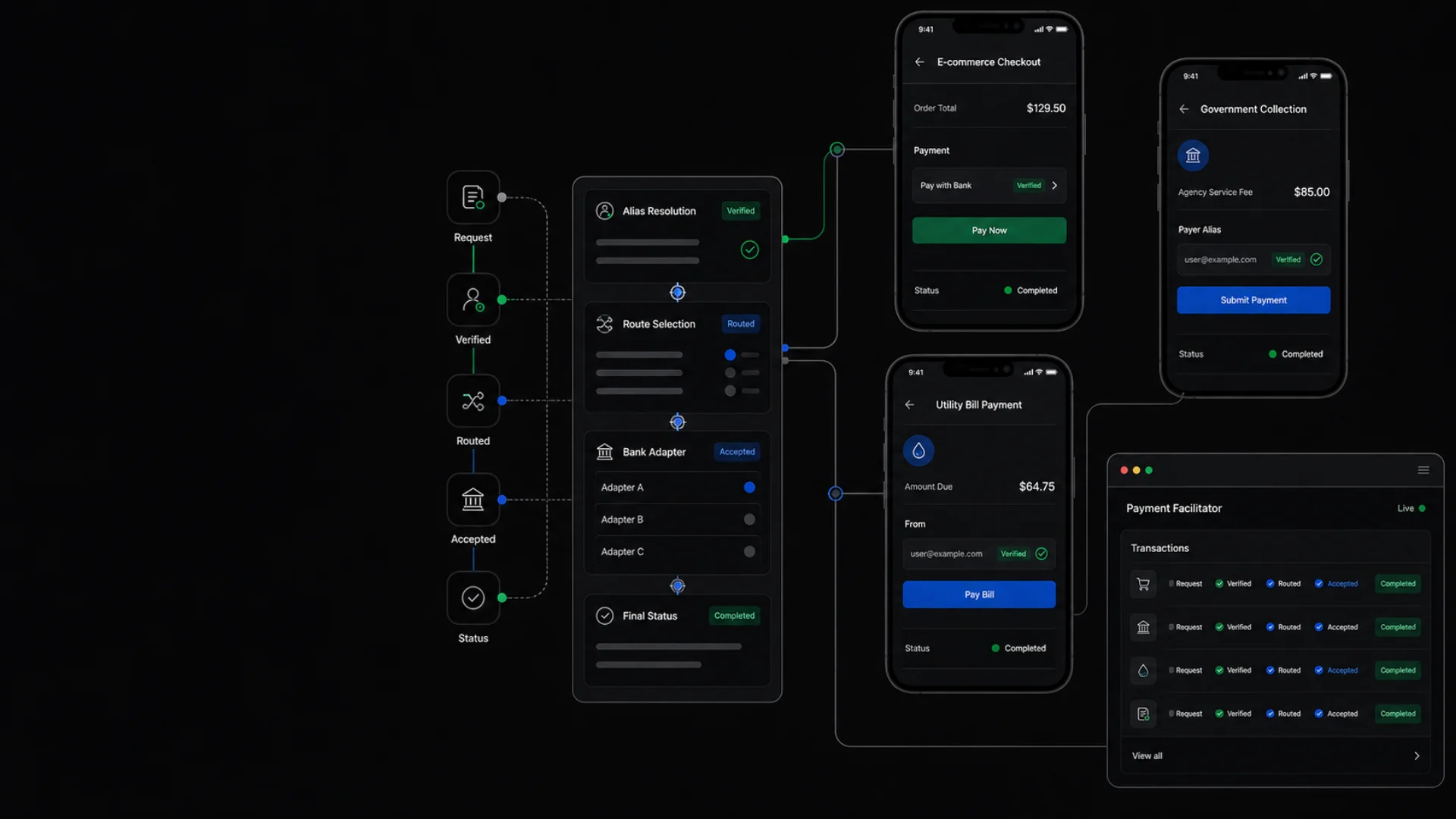
One integration point for payment platforms and fintechs. MEMEH resolves aliases, builds a canonical instruction, dispatches through the selected Bank Adapter, and returns lifecycle status.
Built for payment platforms and banks
Product overview
A payment platform or fintech submits one payment-intent request. MEMEH Core normalizes and validates it, resolves payer and payee aliases to trusted financial addresses, builds a canonical instruction, selects the active payee-side route, and dispatches to the appropriate Bank Adapter.
Understand the operating model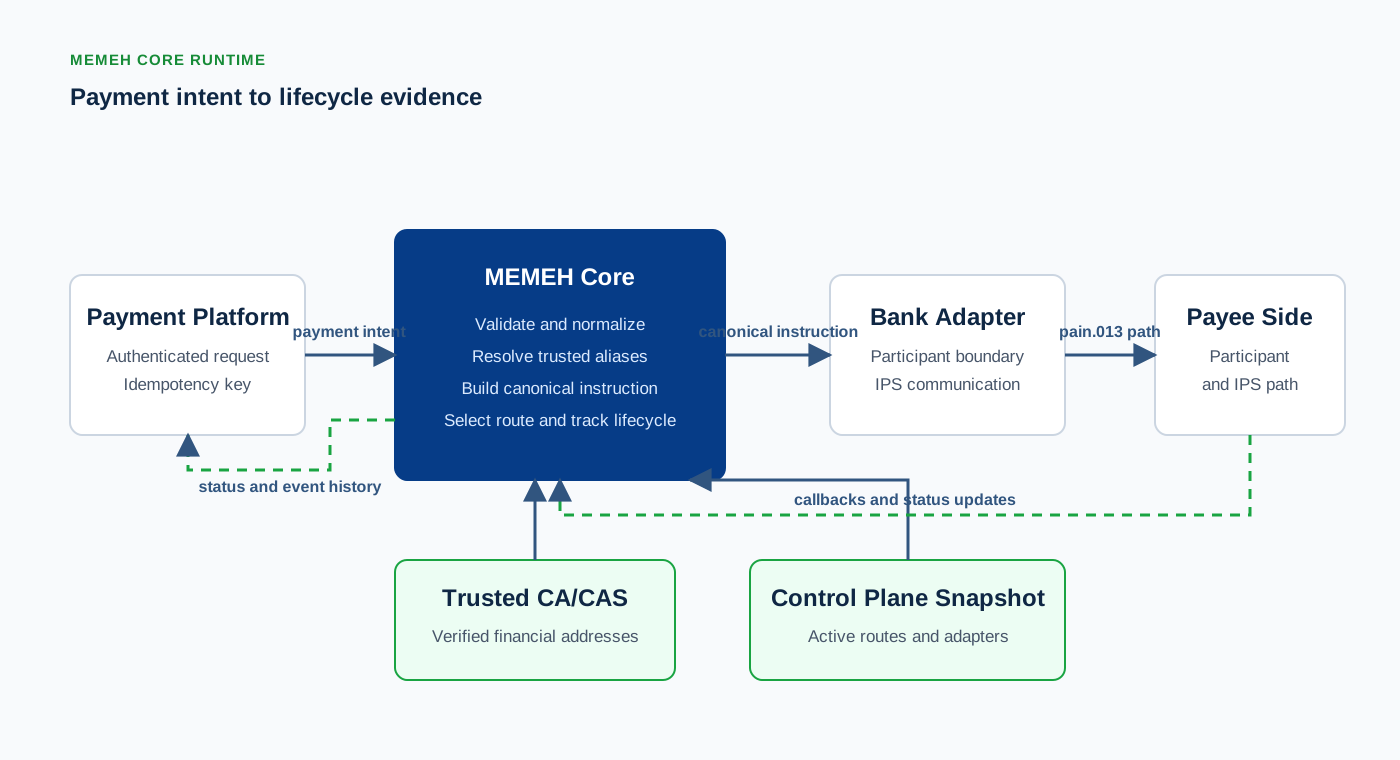
Core capabilities
Machine-to-machine orchestration from authenticated request through terminal lifecycle state.
Validate authentication, idempotency, aliases, amount, currency, reference, and description.
Resolve payer and payee aliases through CA/CAS to verified financial addresses and servicer identifiers.
Build one instruction payload containing financial addresses, amount, currency, reference, and platform context.
Consume the active Control Plane snapshot to select the payee participant route and adapter.
Send the canonical instruction to the selected Bank Adapter for participant and IPS processing.
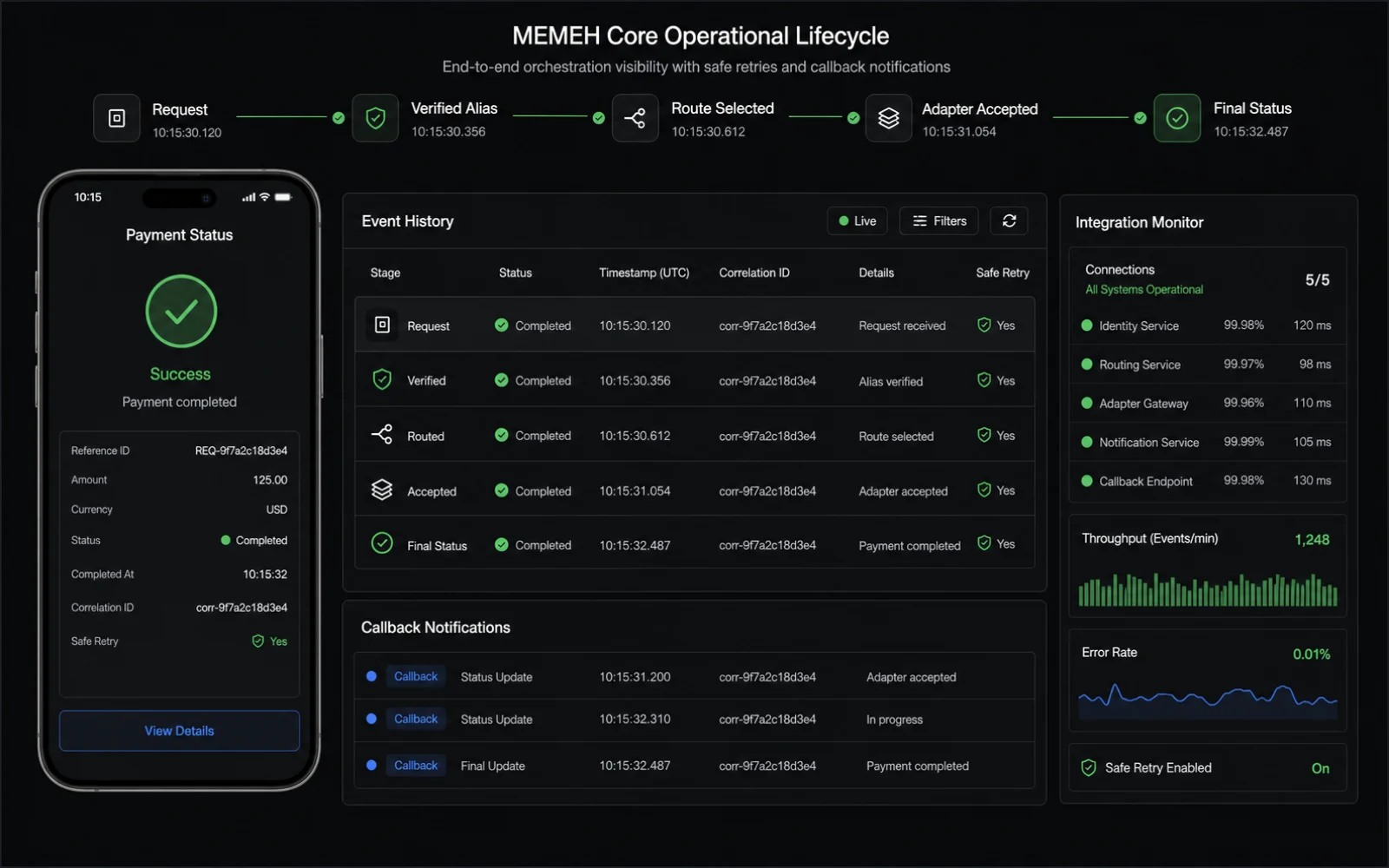
Deduplicate callbacks, validate state transitions, and expose current status and immutable event history.
Responsibility boundaries
MEMEH Core prepares and routes payment instructions using trusted data and published runtime configuration. The surrounding services keep their own authority.
Request validation, alias orchestration, canonical instructions, route selection, dispatch tracking, and lifecycle evidence.
CA/CAS trust data, Control Plane publication, Bank Adapter behavior, and participant/IPS message execution.
Runtime journey
One consistent path keeps message complexity behind a stable authenticated API.
The payment platform sends an authenticated, idempotent payment-intent request.
MEMEH validates inputs and resolves payer and payee aliases through trusted CA/CAS.
MEMEH builds the canonical instruction, selects the active route, and calls the Bank Adapter.
Callbacks update lifecycle state and immutable event history for support, operations, and audit.
Built for technical teams
Give architects, engineers, security reviewers, UAT teams, and operations staff a shared source of truth.